University College, Thiruvananthapuram
Course categories
Skip available courses
Available courses

- Teacher: Dr. Bindumole. V. R Botany
FYUGP
DSC I1 sem: Archegoniates
Bryophytes -General characters
Bryophyta (from Greek Bryon = mass; phyton = plant) is a division of the kingdom Plantae that includes Liverworts, Hornworts, and mosses. They are green plants occupying an evolutionary position between the thallophytes (Algae) and the vascular cryptogams (Pteridophytes). Bryophytes are considered the most simple and primitive group of Embryophyta. They are referred to as the first land plants or non-vascular land plants (Atracheata) because they lack seeds and vascular tissues.
Bryophytes are represented by 960 genera and 24,000 species and are cosmopolitan in distribution, found across temperate and tropical regions. They typically grow densely in moist and shady places, forming thick carpets or mats, especially during the rainy season. While the majority are terrestrial, some species are aquatic, such as Riccia fluitans.
- Teacher: Dr. Bindumole. V. R Botany
- Teacher: Ismail Kunju J Arabic


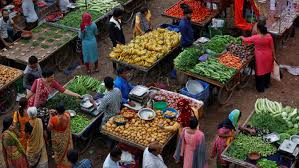
This course is designed for students to understand factual information of Indian Economy and to help them analyze the performance of the economy
- Teacher: Gopika.G.G Economics
- Teacher: Gopika.G.G Economics
- Teacher: Gopika.G.G Economics

This course explores the intersection of public policy, values, and ethics. It examines the ethical dimensions of public policy formulation, implementation, and evaluation. The course aims to develop student’s abilities to think reflectively and argue persuasively about the moral and ethical dimensions of politics, public policies, and careers in public affairs.
- Teacher: Gopika.G.G Economics


This is a course on Literary Theory
- Teacher: Dr. Nevil Stephen S. English

American literature encompasses writings from the US and its colonies,evolving from English roots to a distinct voice reflecting its history diverse cultures,and national identity marked by key periods like colonial, Revolutionary Transcendentalism,Realism and Modernism,Harlem Renaissance,exploring themes of freedom ,individualism,social justice and American Dream,through various genres like novel,poetry and drama.
- Teacher: Anupama S.R English
mjAHKYSUHA
- Teacher: Dr. Nevil Stephen S. English

This is a dynamic course that uses films as a gateway to understand emotional intelligence. Through cinematic examples, participants delve into interpersonal and intrapersonal intelligence, empathy, and social skills. Analysing characters and narratives, students explore how emotions shape relationships and personal growth. By the course's end, participants gain practical insights into emotional literacy, enhancing their ability to navigate life's complexities with empathy and understanding.
- Teacher: Dr Sharada Devi V English





- Teacher: Dr.SINDHU K K History
DSC MINOR 1( FYUGP SEM 1)
- Teacher: Dr Sima Ojas Islamic History

DSC MAJOR (FYUGP-SEM 1)
- Teacher: Dr Sima Ojas Islamic History
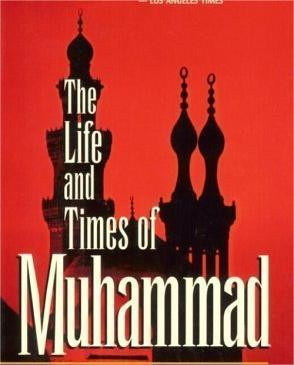
“The Life and Times of Prophet Muhammad” provides a condensed exploration of the pivotal events and significant aspects of the life of Prophet Muhammad, the founder of Islam. The course offers insights into his early life, the revelation
of the Quran, the establishment of the Muslim community in Mecca and Medina, and key moments in his prophetic mission.
- Teacher: Dr. Amanullah A Islamic History

DSC MINOR 1 (FYUGP-SEM 2)
- Teacher: Dr Sima Ojas Islamic History

VAC (FYUGP -SEM 3)
- Teacher: Dr Sima Ojas Islamic History

The objective of this course is to provide students with a
good knowledge about the Islamic Golden Age of Learning
in Spain, also known as the Andalusian Renaissance,
flourished from the 8th to the 15th century. This
progression is planned to give learners about the significant
advancements in various fields including science, mathematics, medicine, philosophy, and literature under the rule of Muslim Caliphates in the Iberian Peninsula. Through this study the students get information about the Scholars like Ibn Rushd (Averroes), Ibn Sina (Avicenna), and Ibn Khaldun made ground-breaking contributions that influenced European Renaissance and Enlightenment thinkers. This period was characterized by religious
tolerance, cultural exchange, and intellectual curiosity, making it a pivotal time in the history of human civilization.
- Teacher: Dr. Amanullah A Islamic History

VAC 2 (FYUGP SEM 4)
- Teacher: Dr Sima Ojas Islamic History
The advent of Islam and political involvement in Indian subcontinent was a great deal of trade, conquests, colonization, empire building, amalgamation of various regional cultures and finally opposition to Europian hegemony.The course covers between 7th century to 19th century of Indian history.It gives the students an understanding of polity and the building of Empires in this period.
- Teacher: Anilkumar. K Islamic History

DSC 1 ( FYUGP- SEmester IV)
- Teacher: Dr. Shajeer S Islamic History

MA (SEM 1)
- Teacher: Dr Sima Ojas Islamic History
Arab–Muslim historiography is a rich intellectual tradition that developed from the early Islamic period, combining narrative history, biography (ṭabaqāt), annals, and geography with a strong emphasis on sources, transmission (isnād), and moral purpose. It evolved from chronicle-based sacred history into sophisticated analytical writing that explored politics, society, economy, and culture, reaching a high point in critical historical thought with scholars like Ibn Khaldun.
- Teacher: Dr. Shajeer S Islamic History
MA (SEM 2)
- Teacher: Dr Sima Ojas Islamic History

MA (SEM 3)
- Teacher: Dr Sima Ojas Islamic History

MA (SEM 4)
- Teacher: Dr Sima Ojas Islamic History
- Teacher: Dr. Dasan J Mathematics
This course equip the students to find the integral of functions, its applications, partial derivatives of functions and to know about the basic concepts of vector valued functions
- Teacher: Biju G S Mathematics
This course introduces the fundamentals of Linear Programming (LP) . It covers the history, definitions, and structure of LP, including model formulation with real-world examples. Students learn the advantages and limitations of LP and solve problems using graphical methods and the simplex algorithm for both maximization and minimization cases. The course also explores special cases in LP and the standard form of an LPP. Advanced solution techniques such as the Two-phase method and Big-M method are included to handle complex constraints.
Key topics:
- Introduction to Operations Research & Linear Programming.
- LP model formulation and graphical solution.
- Simplex method (maximization & minimization).
- Special cases & standard form of LPP.
- Two-phase and Big-M methods for constrained optimization.
- Teacher: Biju G S Mathematics
Functions of Two or more Variables, Limits and Continuity, partial derivatives, Differentiability, Differentials, Local Linearity, Chain Rule.
Directional derivatives, Gradients, Tangent planes, Normal vectors, Maxima and Minima, Lagrange multipliers.
Binary operations, Groups, Abelian, Subgroups, Cyclic Groups.
Non-abelian examples, Groups of permutations, cosets, and the Theorem of Lagrange.
- Teacher: Dr. Indu R S Mathematics
Functions of Two or more Variables, Limits and Continuity, partial derivatives, Differentiability, Differentials, Local Linearity, Chain Rule.
Directional derivatives, Gradients, Tangent planes, Normal vectors, Maxima and Minima, Lagrange multipliers.
Binary operations, Groups, Abelian, Subgroups, Cyclic Groups.
Non-abelian examples, Groups of permutations, cosets, and the Theorem of Lagrange.
- Teacher: Dr. Indu R S Mathematics
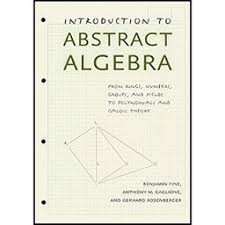
Functions of Two or more Variables, Limits and Continuity, partial derivatives, Differentiability, Differentials, Local Linearity, Chain Rule.
Directional derivatives, Gradients, Tangent planes, Normal vectors, Maxima and Minima, Lagrange multipliers.
Binary operations, Groups, Abelian, Subgroups, Cyclic Groups.
Non-abelian examples, Groups of permutations, cosets, and the Theorem of Lagrange.
- Teacher: Dr. Indu R S Mathematics




This course is aimed to develop skills to construct psychological tests. Item development, item analysis and establishment of psychometric properties are emphasized in the course. Classification of various psychological tests and its application are also included in the course.
- Teacher: Arathi Sarma U Psychology



COURSE OUTCOMES (100 hrs.)
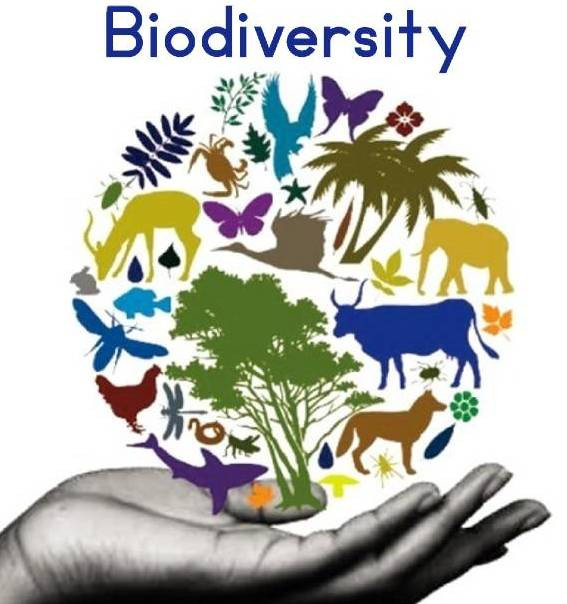
CO 1: Understand the importance of biodiversity conservation and biodiversity hotspots
CO 2: Acquire knowledge on threats to sustainable biodiversity
CO 3: Understand the significance of biodiversity conservation organizations
CO 4: Expertise in different biodiversity quantifying methods
CO5: Understand the importance of wildlife management methods and biodiversity conservation laws
CO 6: Understand the biodiversity of India with special reference to the Western Ghats and its the management
- Teacher: Sajan KS
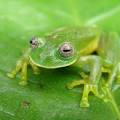
Amphibians -Distinguishing characters,modern Amphibians, Ceacilians
- Teacher: Dr Sheeba S. Zoology
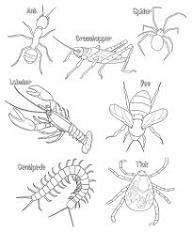
CO1 Describe the salient features and outline classification (up to Classes) of various Lower Non-chordate Phyla
CO2 Describe Protozoa with particular reference to locomotion, nutritio.
CO3 Describe Porifera with reference to classification and canal sysyemCO4 Deseribe Coelenterata with reference to classification. polvmorphis1m, including brief account of Corals and
Coral reefs.
COS Describe general characters of Aschelminthes
CO6 Describe parasitic adaptations in Helminths.
CO Describe Annelida with reference to general features, larval form/s, and metamerism.
CO8 Describe Arthropoda with reference to general features.
CO9 Describe Mollusca with reference to features and torsion.
CO10 Describe Echinodermata with reference to general features, water vaseular system.
- Teacher: Dr. Deepa G Zoology